
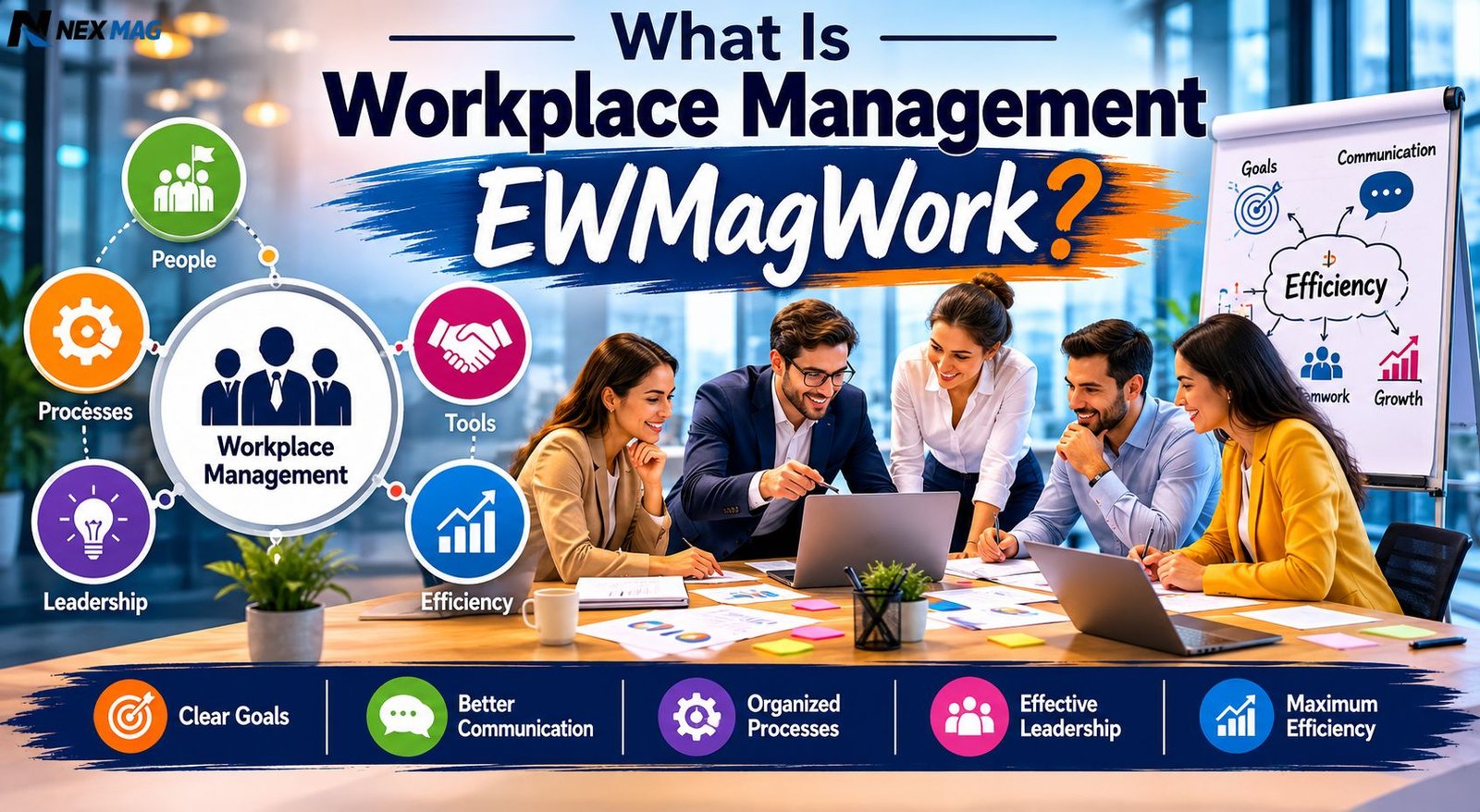
In today’s fast-moving business world, efficiency is no longer just about working faster. It is about working smarter, using the right systems, supporting employees, and creating a workplace where people can perform well without feeling overloaded. This is where workplace management ewmagwork becomes important.
A well-managed workplace helps teams stay organized, communicate clearly, use time wisely, and focus on meaningful goals. Whether a company is small, growing, remote, hybrid, or fully office-based, strong workplace management can improve productivity and reduce daily confusion.
Workplace management ewmagwork is about building a better structure for people, processes, tools, and leadership. It focuses on practical improvements that make work easier, smoother, and more effective. When these improvements are applied consistently, businesses can save time, reduce stress, and create a stronger working culture.
What Is Workplace Management EWMagWork?
Workplace management ewmagwork can be understood as a modern approach to managing people, tasks, systems, and workplace operations in a more organized way. It is not only about managing employees. It also includes communication, workflow planning, technology use, employee engagement, workspace design, and performance tracking.
A workplace becomes efficient when everyone understands their role, knows what needs to be done, and has the right tools to complete tasks. Without proper management, even talented teams can struggle with delays, repeated work, unclear instructions, and poor coordination.
The goal of workplace management is to remove unnecessary friction. It helps managers create a clear work environment where employees can focus on results instead of wasting time on confusion or avoidable problems.
Why Workplace Efficiency Matters
Efficiency matters because time, energy, and resources are limited. When a workplace is poorly managed, employees may spend too much time searching for information, waiting for approvals, attending unnecessary meetings, or fixing mistakes caused by unclear communication.
A more efficient workplace supports better productivity. Employees can complete tasks faster, but more importantly, they can complete them with better focus and quality. This leads to stronger business performance and a more positive work experience.
Efficiency also affects employee satisfaction. People feel more confident when they know what is expected of them. They are less stressed when systems are simple and communication is clear. A workplace that respects people’s time often creates better morale and stronger loyalty.
Common Workplace Problems
Many businesses lose efficiency because of small daily problems that continue for a long time. These problems may not look serious at first, but they can slowly damage productivity.
One common issue is poor communication. When updates are unclear or scattered across too many platforms, employees may miss important details. This can lead to duplicated work, delays, and frustration.
Another problem is unclear responsibility. If people do not know who owns a task, decisions become slow. Teams may wait for direction, or several people may work on the same thing without coordination.
Inefficient processes are also a major reason workplaces lose time. Some companies continue using old methods even when faster and simpler options are available. Over time, these outdated systems reduce speed and make employees feel stuck.
Set Clear Goals
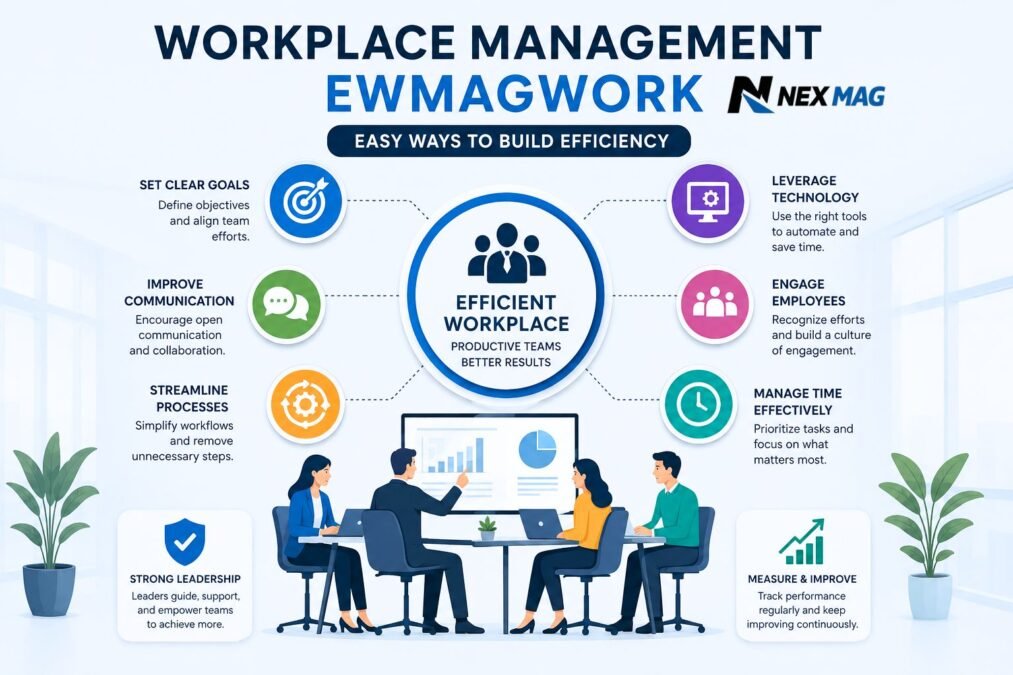
One of the easiest ways to improve efficiency with workplace management ewmagwork is to set clear goals. Employees should understand what the company wants to achieve and how their work supports that direction.
Clear goals help teams focus on what matters most. Instead of working on random tasks, employees can prioritize work that directly supports business success. This reduces wasted effort and creates stronger alignment across departments.
Goals should be specific, realistic, and measurable. A vague goal such as “improve performance” is not enough. A better goal would be “reduce project delivery time by 15% in the next quarter.” This gives the team a clear target and makes progress easier to track.
Improve Communication
Good communication is the backbone of workplace efficiency. Without it, even the best plans can fail. Managers should make sure employees receive the right information at the right time.
A strong communication system does not mean more meetings. In fact, too many meetings can reduce productivity. The better approach is to use short updates, clear documentation, and focused discussions.
Teams should know where to find important information. Project updates, deadlines, responsibilities, and decisions should be stored in a simple and accessible place. This helps employees avoid repeated questions and unnecessary delays.
Open communication also builds trust. When employees feel comfortable sharing ideas, asking questions, and raising concerns, problems can be solved earlier.
Streamline Daily Processes
Every workplace has repeated tasks. These may include reporting, approvals, scheduling, customer follow-ups, onboarding, or project updates. If these tasks are not organized, they can take more time than necessary.
Workplace management ewmagwork encourages businesses to review daily processes and remove unnecessary steps. A process should be simple, clear, and useful. If a step does not add value, it should be improved or removed.
For example, if a report goes through five approval stages when only two are needed, the extra steps slow the team down. If employees manually enter the same data in different systems, automation or better software may save time.
Small process improvements can create big results over time. The goal is not to change everything at once, but to improve the most time-consuming areas first.
Use Technology Wisely
Technology can make workplace management easier, but only when it is used properly. Many companies have too many tools, which can create confusion instead of efficiency.
The best approach is to choose tools that solve real problems. Project management software can help teams track tasks and deadlines. Communication platforms can reduce email overload. Automation tools can handle repetitive work. Shared calendars can improve planning.
However, technology should not replace human judgment. Tools should support employees, not overwhelm them. Before adding new software, managers should ask whether it will genuinely save time, improve clarity, or reduce manual work.
Training is also important. Even a powerful tool becomes useless if employees do not understand how to use it properly.
Build Employee Engagement
Efficiency is not only about systems. It is also about people. Employees who feel valued are more likely to stay focused, contribute ideas, and care about results.
Employee engagement grows when people feel respected, supported, and connected to their work. Managers can improve engagement by recognizing good performance, listening to feedback, and giving employees opportunities to grow.
A workplace where people feel ignored often struggles with low motivation. On the other hand, a workplace that encourages participation can create stronger teamwork and better results.
Workplace management ewmagwork should include regular check-ins, fair feedback, and a healthy balance between expectations and support.
Optimize the Workspace
The physical or digital workspace affects how people work. A noisy, crowded, or poorly organized office can reduce focus. A confusing digital workspace can also slow employees down.
For office-based teams, workspace design should support concentration, collaboration, and comfort. Employees may need quiet areas for deep work, meeting spaces for teamwork, and comfortable setups for long working hours.
For remote and hybrid teams, the digital workspace becomes even more important. Files, tools, communication channels, and workflows should be easy to access. Remote employees should not feel disconnected from the rest of the team.
A well-designed workspace helps people do their best work with fewer distractions.
Manage Time Better
Time management is a major part of workplace efficiency. Many employees lose time because of unclear priorities, constant interruptions, and unnecessary meetings.
Managers can improve time management by helping teams separate urgent tasks from important tasks. Not every task needs immediate attention. When everything is treated as urgent, employees feel pressured and productivity suffers.
A good workplace management system protects focus time. This may include meeting-free hours, clear deadlines, task prioritization, and better planning.
Employees should also be encouraged to complete high-value work during their most productive hours. Good time management is not about filling every minute. It is about using time with purpose.
Strengthen Leadership
Leadership plays a central role in workplace management ewmagwork. A manager’s behavior often shapes the entire work culture. If leaders are unclear, reactive, or disorganized, teams usually become the same.
Strong leaders provide direction, remove obstacles, and support employee growth. They do not only assign tasks. They help people understand why the work matters and how to complete it effectively.
Good leadership also means listening. Employees often know where workplace problems exist because they deal with them every day. Leaders who listen carefully can identify practical improvements faster.
An efficient workplace needs leaders who are consistent, fair, and open to improvement.
Measure Performance
A business cannot improve what it does not measure. Workplace efficiency should be tracked through simple and meaningful performance indicators.
Useful metrics may include project completion time, employee satisfaction, customer response time, task accuracy, absenteeism, and workflow delays. These numbers help managers understand what is working and what needs attention.
However, measurement should not become pressure. The goal is to improve systems, not create fear. When performance tracking is used fairly, it helps teams make better decisions.
Regular reviews can also show whether new workplace management strategies are delivering results.
Support Hybrid Work
Hybrid work has become a major part of modern workplace management. Many employees now expect flexibility, but flexibility must be managed carefully.
A strong hybrid model needs clear rules. Teams should know when they need to be available, how meetings are handled, how work is tracked, and how communication should happen.
Hybrid work can improve satisfaction and productivity when it is structured well. But without proper planning, it can create communication gaps and unequal access to information.
Workplace management ewmagwork can help businesses create a balanced system where both office and remote employees stay connected and productive.
Encourage Continuous Improvement
Efficiency is not a one-time project. Workplaces change constantly as teams grow, technology develops, and business goals shift. This is why continuous improvement is important.
Managers should regularly review workflows, collect feedback, and test better ways of working. Small improvements can be more effective than sudden large changes.
Employees should also be encouraged to suggest improvements. When people are involved in shaping the workplace, they are more likely to support new systems.
A culture of continuous improvement keeps the workplace flexible and ready for future challenges.
Avoid Overcomplication
One mistake businesses often make is overcomplicating workplace management. Too many rules, tools, reports, and meetings can reduce efficiency instead of improving it.
The best systems are simple enough for people to follow. Clear instructions, easy tools, and practical processes usually work better than complex structures.
Before introducing a new rule or system, managers should ask one question: will this make work easier or harder? If it makes work harder without clear value, it may not be needed.
Simple management is often more powerful than complicated management.
Future of Workplace Management
The future of workplace management will be shaped by flexibility, technology, employee well-being, and data-driven decisions. Businesses will continue using digital tools, automation, and artificial intelligence to improve operations.
At the same time, human connection will remain important. Employees still need trust, support, communication, and strong leadership. Technology can improve systems, but people create the culture.
Companies that combine smart tools with human-centered management will be better prepared for long-term success.
Workplace management ewmagwork fits this future because it focuses on practical efficiency, better organization, and a healthier work environment.
Conclusion
Workplace management ewmagwork is a practical way to build efficiency in modern businesses. It helps companies improve communication, organize workflows, use technology wisely, support employees, and create a stronger workplace culture.
Efficiency does not come from forcing people to work harder. It comes from removing barriers, setting clear goals, improving systems, and giving employees the support they need to perform well.
A productive workplace is built step by step. Clear communication, better time management, strong leadership, employee engagement, and continuous improvement all play an important role.
When workplace management is done well, teams become more confident, processes become smoother, and businesses become stronger. For any organization that wants long-term growth, workplace management ewmagwork is a smart and practical approach to building real efficiency.
FAQs
What is workplace management ewmagwork?
Workplace management ewmagwork is an approach that focuses on improving workplace efficiency through better communication, organized workflows, effective leadership, and smart use of resources.
Why is workplace management important for businesses?
Good workplace management helps businesses increase productivity, reduce operational problems, improve employee satisfaction, and achieve long-term organizational goals.
How can workplace management ewmagwork improve efficiency?
It improves efficiency by streamlining processes, setting clear goals, reducing communication gaps, using technology effectively, and creating a structured work environment.
What are the biggest workplace efficiency challenges?
Common challenges include poor communication, unclear responsibilities, outdated processes, time management issues, and lack of employee engagement.
Can small businesses benefit from workplace management ewmagwork?
Yes. Small businesses can use workplace management ewmagwork to improve organization, enhance teamwork, reduce wasted time, and support sustainable growth with limited resources.
